There is a moment — usually about forty-five minutes before you need to leave for a black tie event — when a man stares into his closet and wonders whether a dark suit will "pass." It will not pass. Someone will notice. That someone will not say anything, but they will notice, and you will spend the rest of the evening subtly aware of it. The good news is that black tie, despite its reputation as the Everest of dress codes, is actually quite simple once you understand the rules. The even better news: there is considerable room for personality within those rules, as long as you do not attempt to summit Everest in flip-flops.
Consider this your complete, honest, occasionally irreverent guide to the black tie dress code — what it is, where it came from, how to wear it, and how to wear it well.
A Brief and Surprisingly Entertaining History
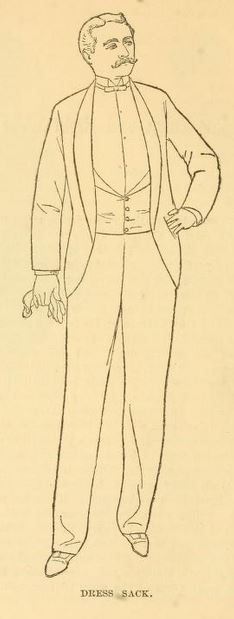
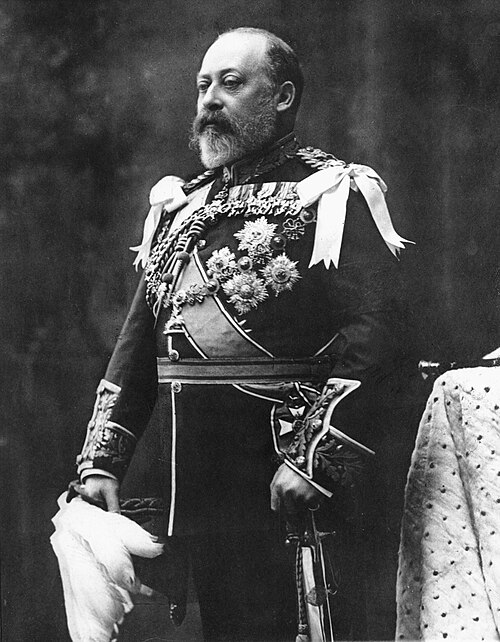
Black tie was born, as many great things are, from a desire to be slightly more comfortable. In 1865, Edward — then Prince of Wales, later Edward VII, and a man with pronounced opinions about his own ease — commissioned Savile Row tailors Henry Poole & Co. to create a short dinner jacket without tails for private evenings at Sandringham, his country estate in Norfolk. The garment was essentially a lounge jacket in evening fabrics: tailcoat finishes, smoking jacket collar, no tail. Scandalous simplicity.
The style crossed the Atlantic in 1886 when James Brown Potter, an American socialite visiting Sandringham, was so taken with the Prince's jacket that he had Henry Poole make him one. Potter brought it home to Tuxedo Park, New York — a private enclave for Manhattan's social elite about forty miles north of the city. When he wore it to the club's Autumn Ball that October, the assembled gentlemen were appalled and fascinated in roughly equal measure. Americans, who have never been especially precious about British formality, embraced it immediately. They named it after the town. The British, to this day, still call it a dinner jacket. Both sides remain quietly convinced the other got it wrong.
Public domain — Wikimedia Commons
"What began as royal comfort wear — a request not to wear a tailcoat at one's own dinner table — became the world's most enduring evening uniform."
By the early twentieth century, the dinner jacket had spread through every layer of society that could afford one. By mid-century, it had become the definitive language of glamour — spoken fluently in the grand hotels of Europe, the dining rooms of ocean liners, and, crucially, on film.
Public domain — Wikimedia Commons
The Silver Screen Gets Involved
If you want to understand why black tie carries the weight it does, look no further than the movies. Hollywood did more for the tuxedo than any etiquette manual ever could, because Hollywood understood something the etiquette manuals missed: a man in a perfectly cut dinner jacket does not merely look dressed. He looks ready.
Humphrey Bogart in Casablanca (1942) is the canonical example. Rick Blaine runs a nightclub in wartime Morocco, has complicated feelings about a woman, and wears his white dinner jacket as though it were a second skin. The jacket communicates everything about the character without a line of dialogue — that he was once the kind of man who dressed for dinner, and that underneath the cynicism, he still is. There is a lesson in this, and it has nothing to do with Morocco.
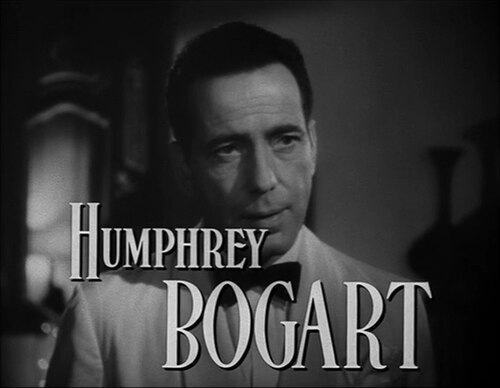
Public domain — from the original theatrical trailer, Wikimedia Commons
Then there is James Bond, who elevated the tuxedo from clothing to mythology. Sean Connery's introduction in Dr. No (1962) — black dinner jacket, black bow tie, a cigarette, the word "Bond" delivered with preposterous ease — set a template that decades of sequels have never improved upon. Bond does not wear a tuxedo because the plot requires it. Bond wears a tuxedo because he understands that certain evenings call for a certain kind of armor, and this is his. He also ordered the wrong martini, but that is a conversation for a different journal entry.
"Bond does not wear a tuxedo because the plot requires it. He wears it because certain evenings call for a certain kind of armor — and this is his."
What Bogart and Connery both understood — what every man in a well-made dinner jacket instinctively feels — is that black tie is not a costume. It is a posture. The clothes do not make the man, exactly, but they give the man an excellent place to start.
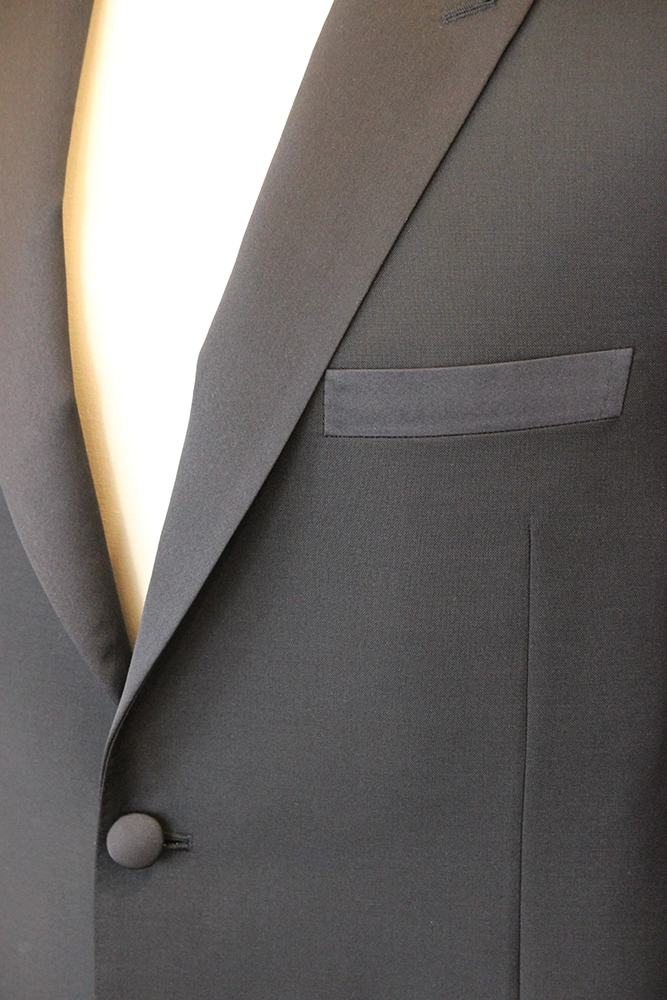
What Black Tie Actually Means: The Anatomy of the Look
Let us be practical. The invitation says "Black Tie." Here is what that means, piece by piece.
The Black Tie Attire Checklist
- The Jacket
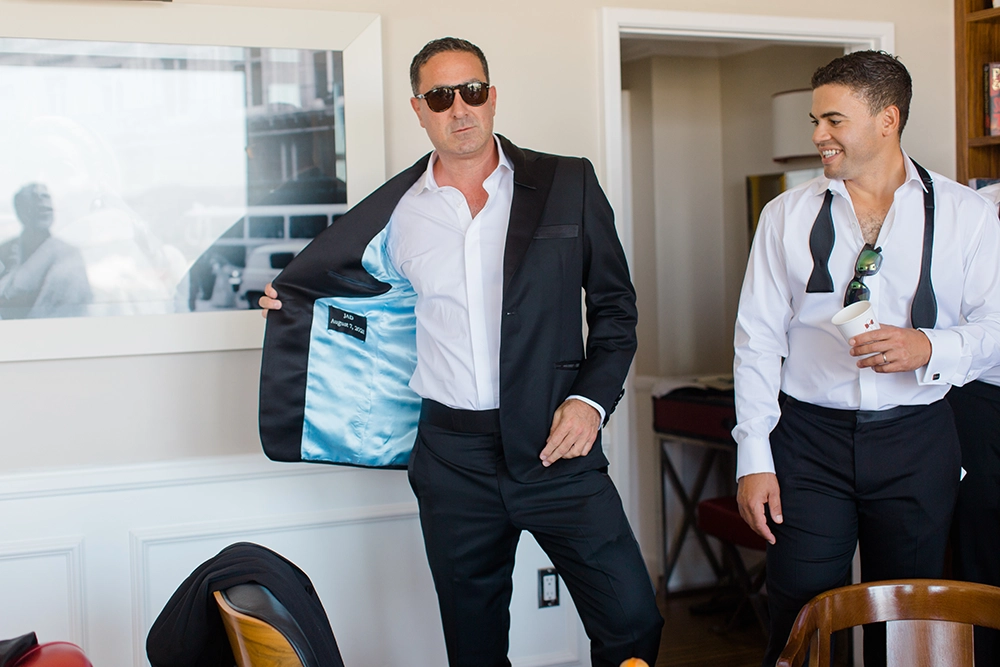
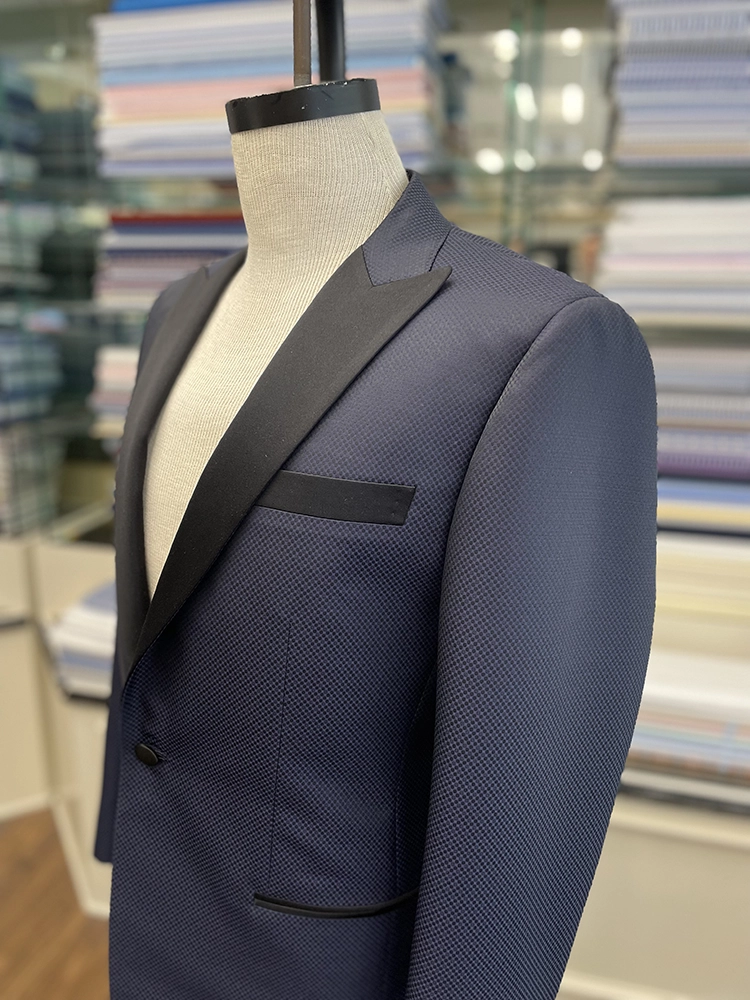
- A dinner jacket — black or midnight navy, single- or double-breasted — with satin or grosgrain lapels in either a shawl or peak shape. Not notch lapels. Never notch lapels. The notch lapel is the dark suit that almost passed. It did not pass.
- The Trousers
- Matching wool or mohair trousers with a single satin or grosgrain stripe running down each leg. No belt. The stripe is not decorative — it is structural, visually lengthening the leg. Braces are the correct way to hold them up, if needed.
- The Shirt
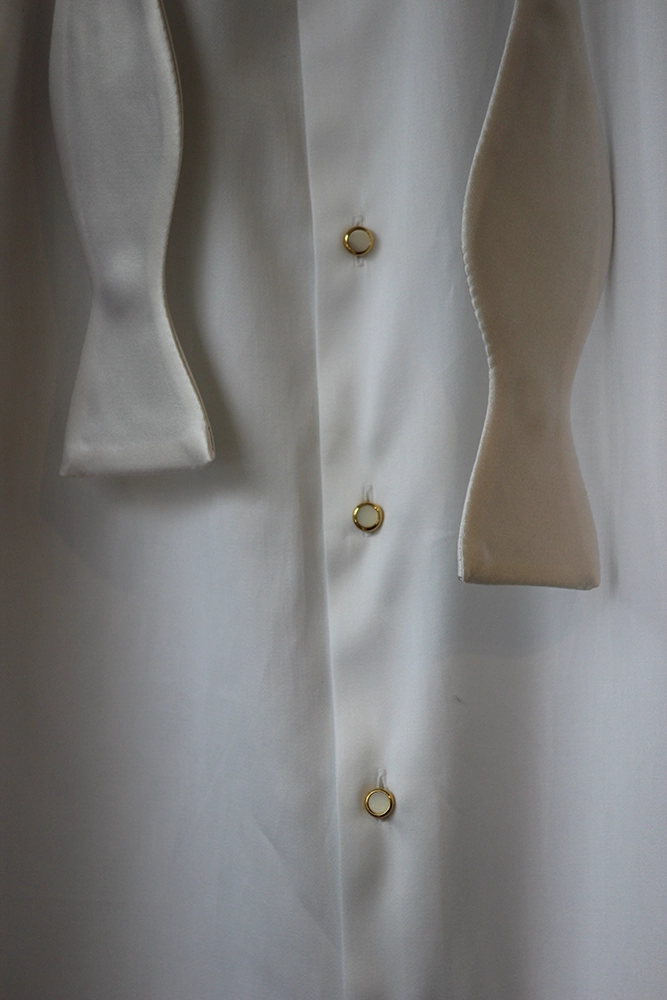
- White only. A dress shirt with a pleated or piqué bib front, French cuffs, and a stiff collar. This is where quality becomes visible: the weight of the cotton, the precision of the placket, the way the collar holds its shape at midnight.
- The Bow Tie
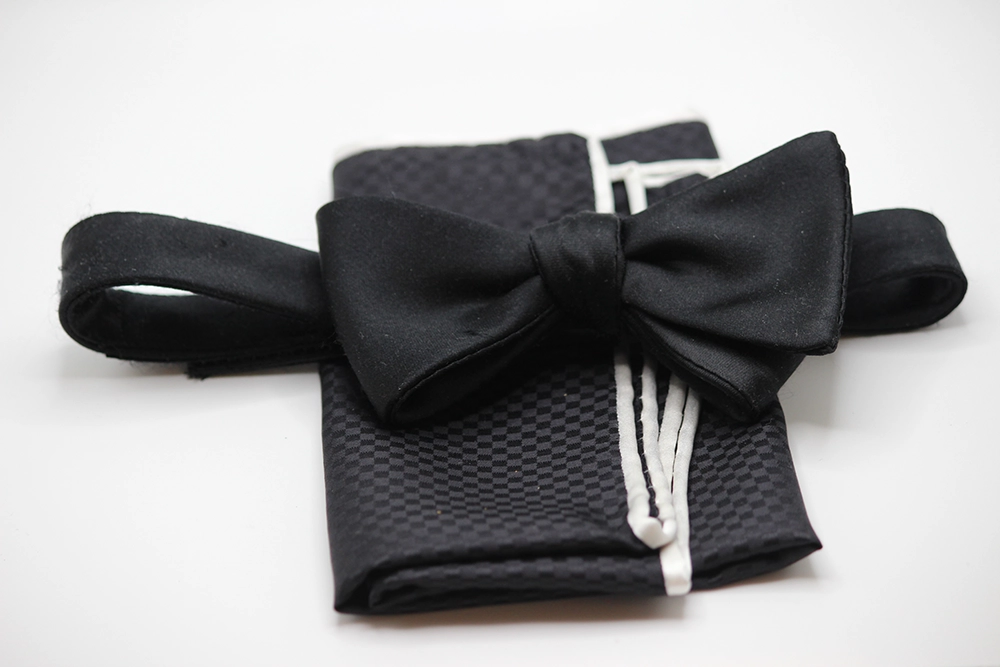
- Black. Self-tied. Always self-tied. A pre-tied bow tie is to a dinner jacket what a plastic tiara is to the Crown Jewels — it gestures in the right direction while missing the point entirely. Silk satin or grosgrain. A slight asymmetry is not only acceptable but proof that a human being tied it.
- The Pocket Square
- White. Folded simply — flat and clean. This is not the moment for a complex origami situation. The pocket square is punctuation, not a headline.
- Studs & Cufflinks
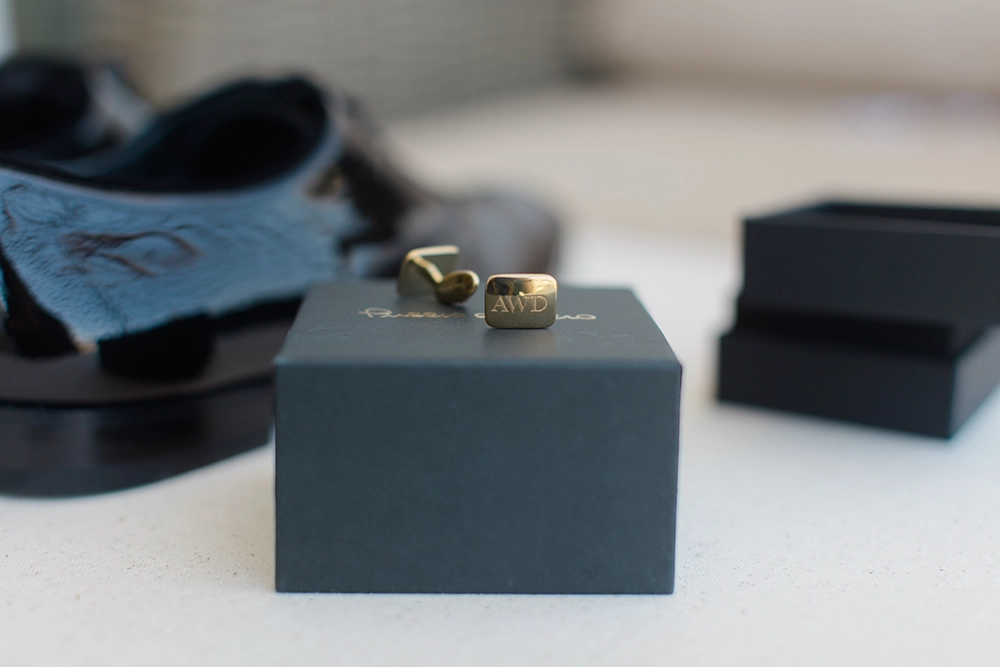
- Shirt studs replace the buttons on the bib front. Mother-of-pearl, onyx, or simple silver are all correct. Matching cufflinks close the French cuffs. They are the jewelry of the ensemble — small, deliberate, impossible to ignore once you know to look for them.
- The Shoes
- Black patent leather oxfords are traditional. A highly polished black calf leather cap-toe works equally well. Opera pumps — black loafers with a grosgrain bow — are correct and underused. What is not correct: Chelsea boots, suede, and the persistent optimism of brown.
Where Personality Lives
Here is where it gets interesting. Black tie is not a straitjacket — it is a framework, and within that framework there is considerable latitude. The classic look in black wool or midnight navy is correct and always will be. But the framework accommodates much more.
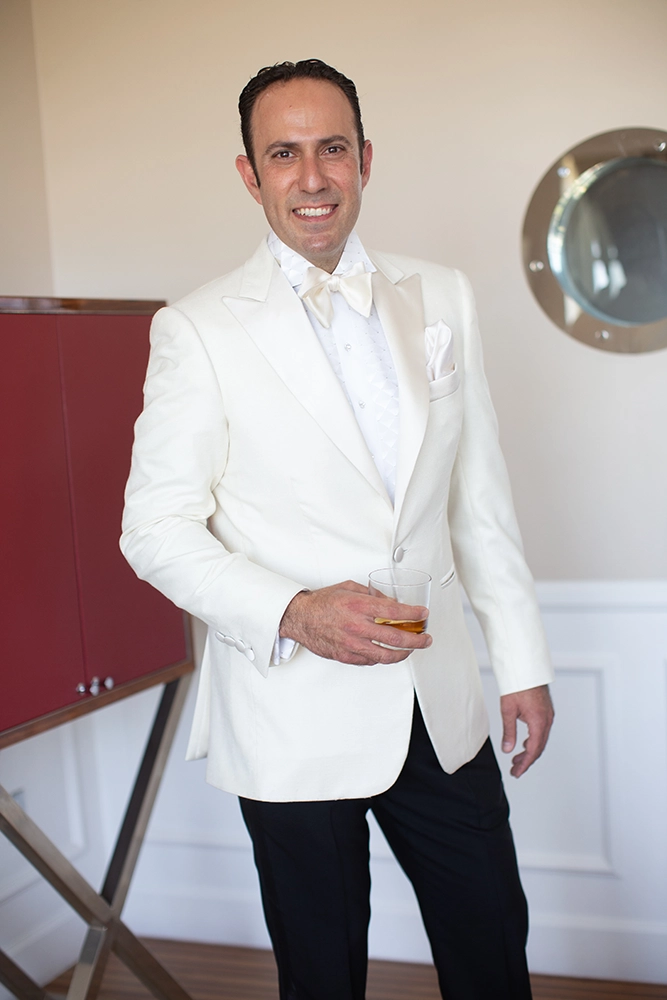
A white or ivory dinner jacket — Rick Blaine's choice, and a wise one for any summer wedding in a warm climate — is entirely within the rules and considerably more interesting than standard black. Velvet, in black or a deep jewel tone, is exceptional for winter evenings. Midnight navy reads as black under most artificial light but carries a depth that black wool cannot match. A blue velvet tuxedo, for the man who knows exactly what he is doing, is a statement that requires no further explanation.
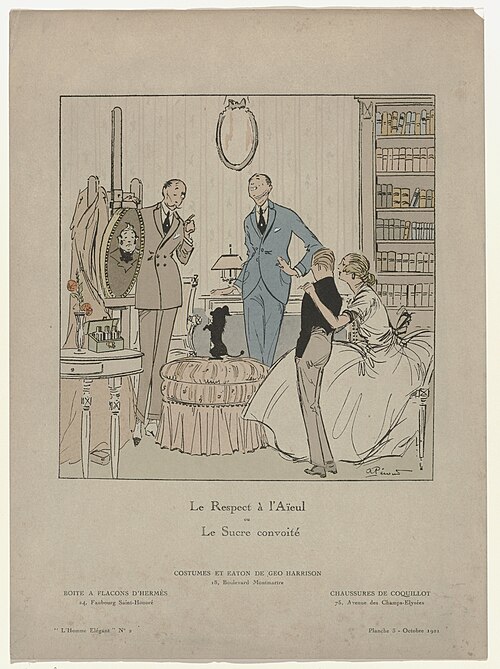
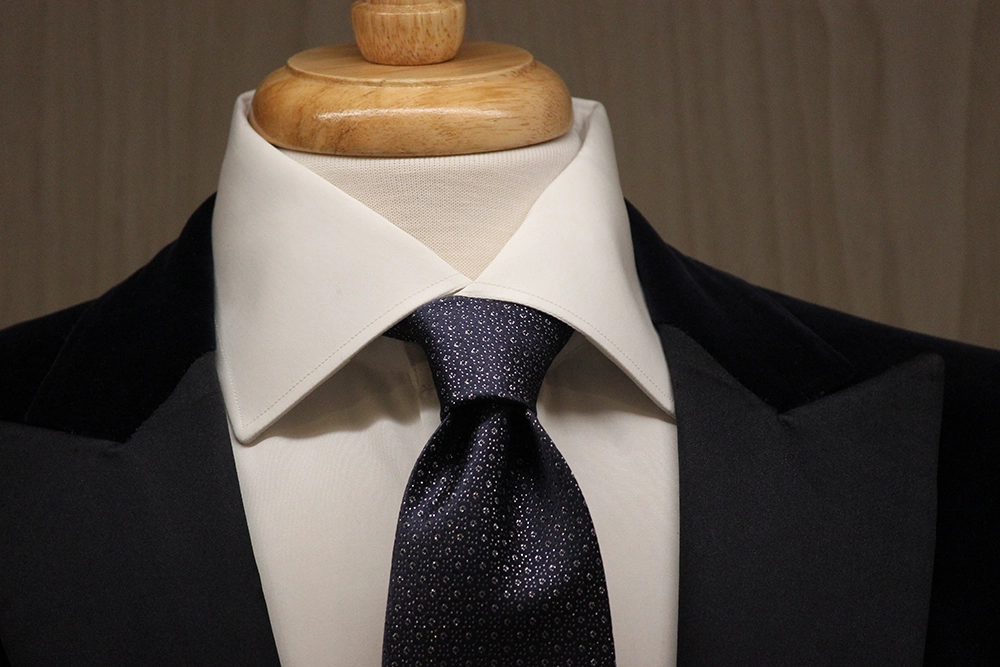
The shirt is perhaps the most overlooked canvas. A pleated bib is traditional; a piqué bib is more formal; a plain front is modern. But within these options — the fabric, the collar shape, the stud configuration, a subtle self-stripe, a metallic bib for something truly singular — lies a world of quiet distinction available to anyone willing to look.
Public domain — Wikimedia Commons

On Wearing It
The final thing — the thing no checklist can fully convey — is that a dinner jacket must be worn, not endured. There is a version of black tie that looks correct on paper and deeply uncomfortable in person: the man tugging at his collar, checking his cuffs, standing slightly too carefully, as though the clothes might shatter if he moves naturally. This is not the goal.
The goal is the man who walks into a room and has, in some sense, already arrived. The clothes are part of that arrival, but only because he has made peace with them. The bow tie is slightly off-center because he tied it himself and did not then spend fifteen minutes correcting it. The jacket fits because it was made for him — his shoulders, his posture, his particular way of standing. The shoes are polished because he polished them.
None of this is difficult. All of it is worth it. Black tie exists because some occasions deserve more than the ordinary. A wedding, a gala, a significant evening among people you care about — these are the moments that call for a certain quality of attention. Getting dressed properly is simply the first act of that attention.
Rick Blaine understood this. James Bond understood this. The Prince of Wales, sitting in his Sandringham dining room in 1865 in a jacket without tails, looking rather pleased with himself — he understood it too.
At Mr. Alex, every element of a bespoke formal ensemble — jacket, trousers, shirt, and accessories — is handcrafted in our Beverly Hills atelier using fabrics sourced from the world's finest mills. If you have an event on the horizon, or simply believe that a man should own at least one dinner jacket that fits, we would be glad to talk.