Somewhere in the last twenty years, a quiet consensus formed: the tie was over. The pocket square was affectation. The cufflink was an inconvenience best left in a drawer. Open-collar shirts arrived in boardrooms. Sneakers followed. The business casual dress code — that monument to compromise — became the ceiling rather than the floor. And with each concession, something was lost that nobody quite named at the time: the idea that how a man dresses for the world reflects how he regards it.
This is not a lament. It is an argument. The necktie, the pocket square, and the cufflink are not relics. They are, for the man willing to use them, the most expressive tools in the wardrobe — the details that transform a suit from clothing into a statement, a sport jacket from something you threw on into something you chose. At Mr. Alex, we have not given up on them. We never will.
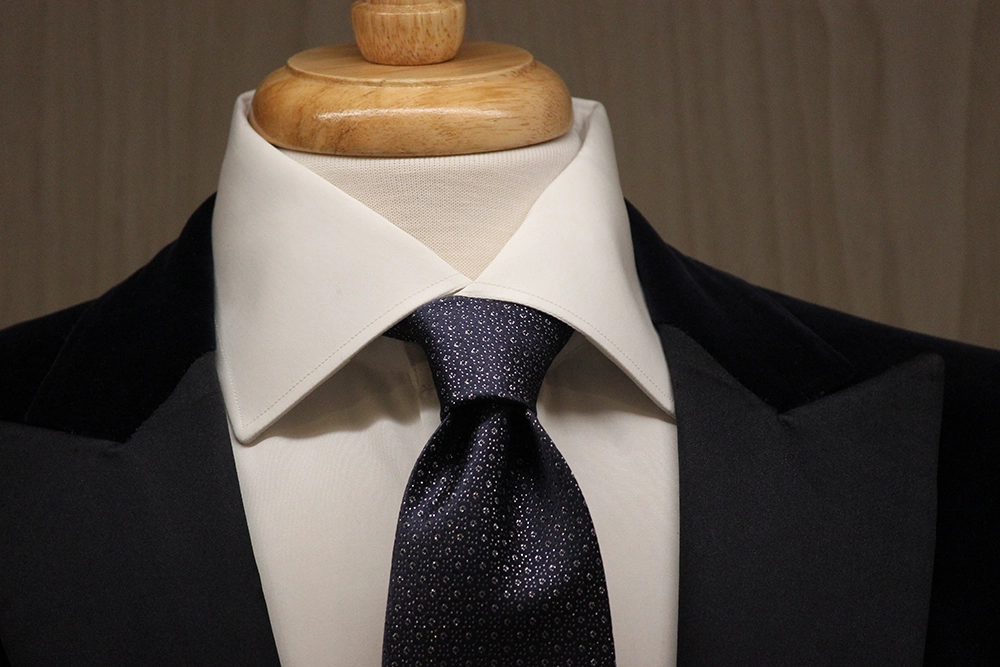
The Necktie: A Short and Useful History
The modern necktie has its origins in the seventeenth century, when Croatian mercenaries fighting in the Thirty Years' War arrived in France wearing linen cravats tied at the throat. Louis XIV was immediately taken. He adopted the style, appointed a Royal Cravat Maker to the Court, and within a generation the cravat had spread across Europe with the speed of a very elegant epidemic. The English simplified it into the necktie. The Americans standardized it. By the twentieth century, the tie had become the near-universal language of the dressed man — worn by presidents and doormen, by jazz musicians and bankers, by every schoolboy on picture day since the invention of picture day.
What made the necktie persist for three and a half centuries was not convention. It was utility. A well-chosen tie does something no other garment does: it frames the face, draws the eye upward, and gives color and pattern to a jacket that might otherwise be a rather rectangular object in grey wool. The tie is where personality enters the suit. Remove it, and the ensemble is complete — but something has gone quiet.
"A well-chosen tie does something no other garment does: it frames the face, draws the eye upward, and gives color and pattern to a jacket that might otherwise be a rather rectangular object in grey wool."
The decline of the tie is real, but its causes are worth examining. Silicon Valley normalized open collars as a signal of creative authority. Remote work removed the audience entirely. And somewhere along the way, wearing a tie began to be framed — particularly to younger men — as submission to a dress code rather than expression through one. This is exactly backwards. A man who wears a tie because he wants to is making a statement. A man who wears one because the office requires it is following a rule. The first is elegance. The second is compliance. They are not the same thing, and only one of them is worth defending.
What a Tie Actually Does for an Ensemble
The practical case for the tie is straightforward. A solid navy suit is, by itself, correct and unremarkable. Add a white dress shirt, and you have a clean canvas. Add a silk tie in burgundy, or a deep gold, or a soft teal with a discreet pattern, and you have a man who made a decision. The tie introduces color, texture, and scale that nothing else in the ensemble provides. It is, in every sense, the most visible expression of taste in the dressed man's repertoire.
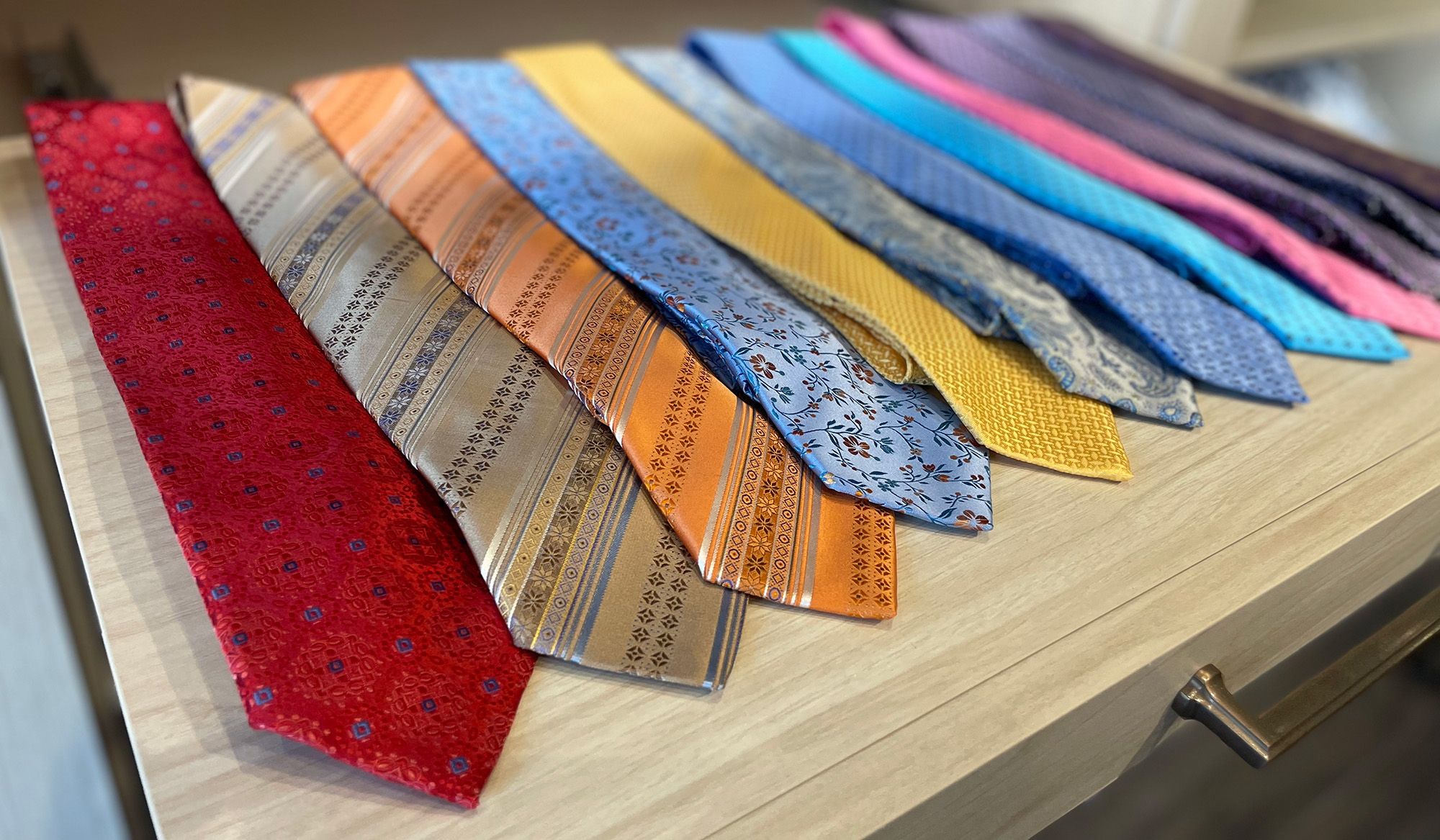
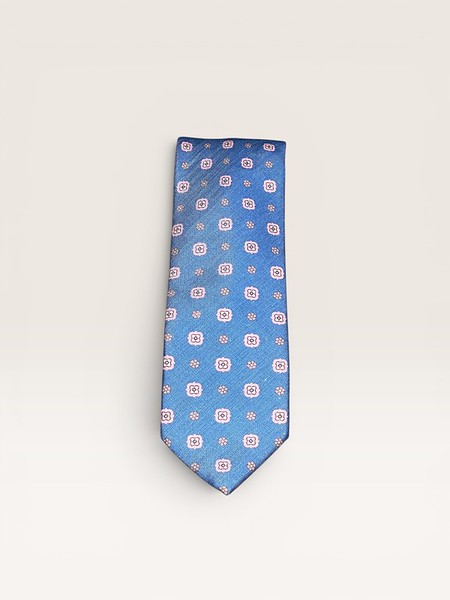
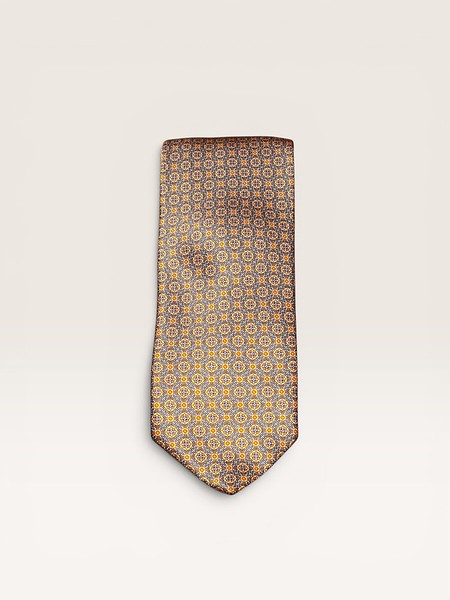
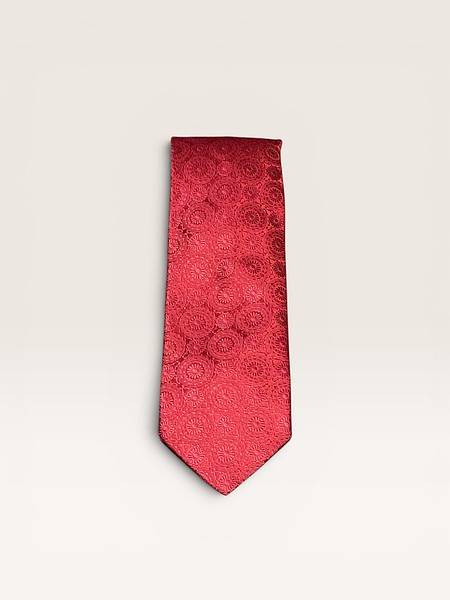
But the tie's role is not limited to formal occasions. This is the misunderstanding that has cost it the most ground. A sport jacket — in flannel, or hopsack, or cavalry twill — worn with a dress shirt and a well-knotted tie is not overdressed for dinner. It is not overdressed for a weekday meeting that matters. It is not overdressed for the sort of occasion that once would have gone without a second thought. It is simply dressed. The casualization of daily life has quietly redefined "dressed" to mean "wearing something," and this is a standard worth resisting.
The knot, for the record, should suit the collar. A spread collar invites a Windsor or half-Windsor; a point collar prefers a four-in-hand. The dimple, just below the knot, is not optional — it is the mark of a tie that has been tied by someone who knows why it matters. It takes five seconds. It changes everything.
The Pocket Square: The Highest-Return Investment in Menswear
If the tie is the most expressive accessory in the wardrobe, the pocket square is the most underused. It requires no tying. It adds no weight. It cannot be heard on the street. And it transforms the breast pocket of a jacket — that small rectangle of fabric that might otherwise serve no purpose at all — into the most refined detail in the ensemble.
The options are broad, and each carries a different register. A white linen square, folded flat with a clean edge showing, is the most formal presentation: correct with a dinner jacket, correct with a dark suit, correct in virtually every situation that calls for a jacket at all. A silk square in a pattern — a paisley, a neat foulard, a geometric — can echo the tie or deliberately contrast it. A cotton or wool square with a casual rolled edge carries a different energy entirely: relaxed, but not careless. There is a meaningful difference between those two states, and the pocket square is how you communicate which one you're in.
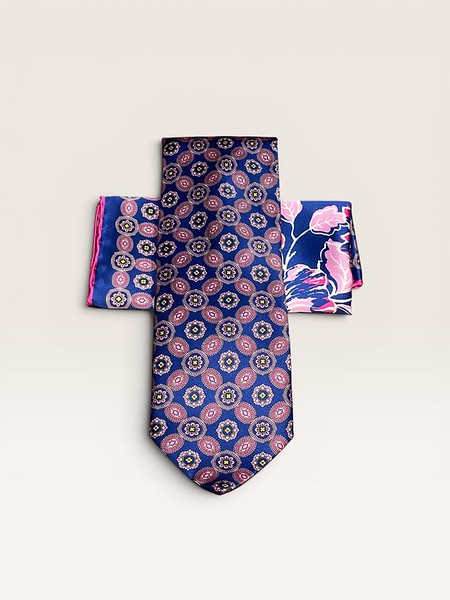
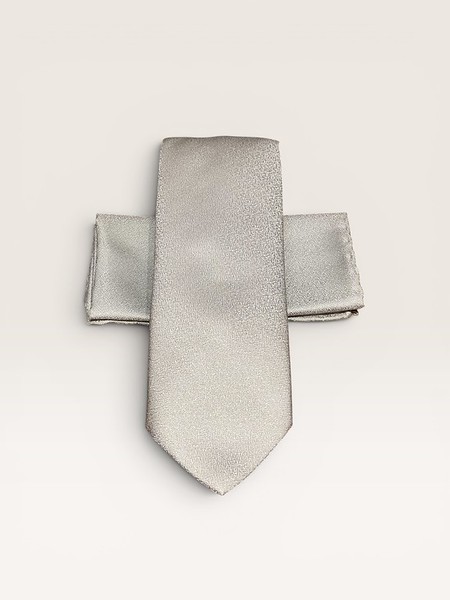
The monogrammed pocket square deserves particular mention. To have your initials worked into a piece of silk is to make it yours in a way that no off-the-rack option can match. It is also, incidentally, to make it the kind of thing that does not get discarded — that gets folded carefully, returned to the drawer, taken out again years from now by someone who wonders whose initials those were. This is not a small thing.
"A pocket square transforms the breast pocket of a jacket — that small rectangle that might otherwise serve no purpose — into the most refined detail in the ensemble."
The Cufflink: Something Worth Passing Down
Cufflinks occupy a category of their own, because they are not merely accessories. They are heirlooms in waiting.
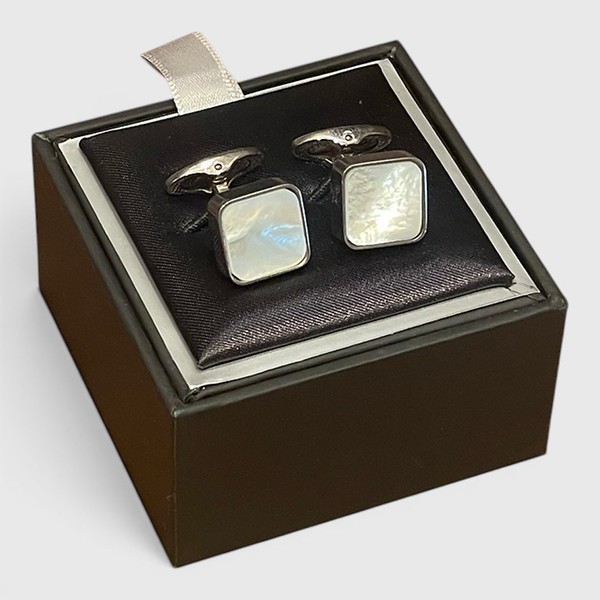
A well-made pair of cufflinks — in sterling silver, gold, mother-of-pearl, onyx, or any material with actual weight to it — does not wear out. It does not go out of style in any meaningful sense. It does not depreciate the way that almost everything else in a wardrobe does. What it does is acquire history. The man who buys a pair of monogrammed gold cufflinks at thirty will wear them at forty, at sixty, and, if he is lucky enough to live long enough, will eventually hand them to someone who will fasten them to his own cuffs and feel the weight of all those years in two small pieces of metal.
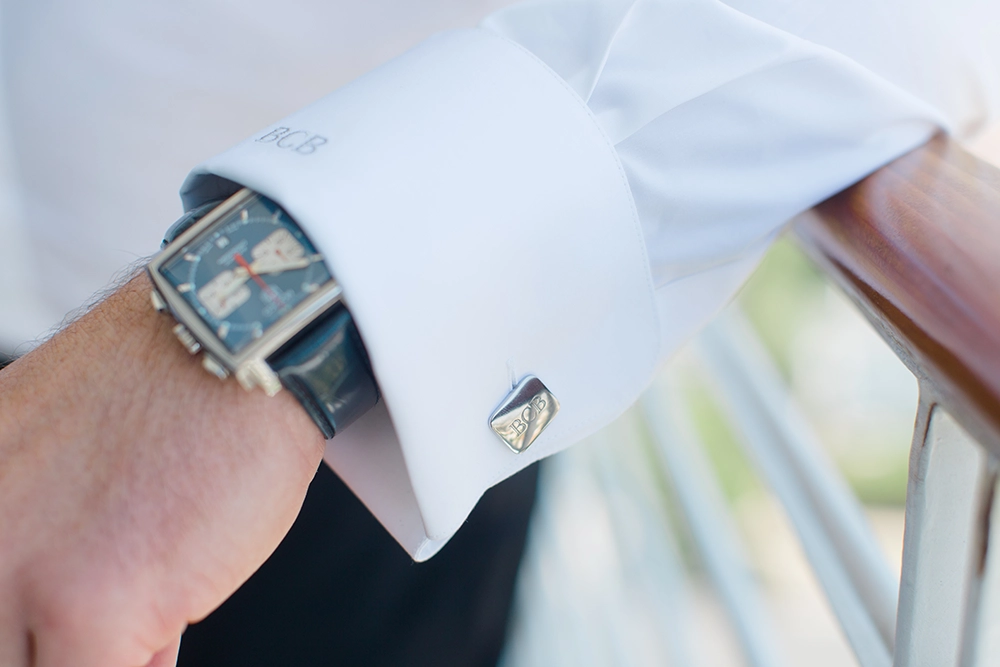
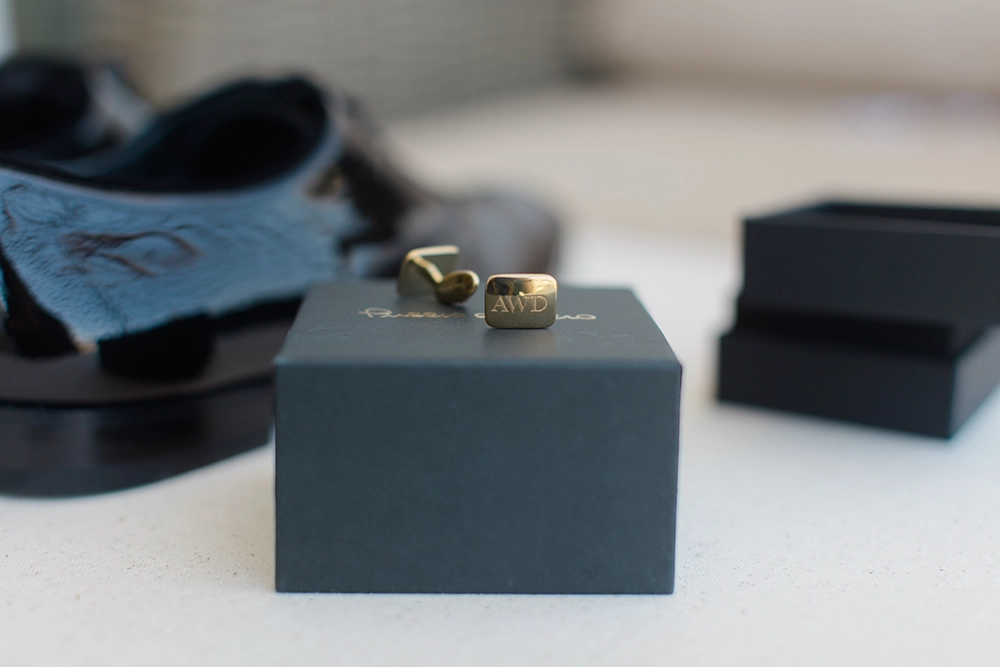
Every man of a certain generation remembers raiding his father's accessories drawer — or his grandfather's, or his uncle's — and finding things: a pair of cufflinks with someone else's initials. A tie clip engraved with a date. A collar bar worn smooth at the edges from years of use. A silk tie, rolled carefully, that still held its color. These objects carried weight because they were made to carry weight, physically and otherwise. They were not meant to be replaced each season. They were meant to accumulate meaning.
The current generation has been handed a different proposition: that accessories are interchangeable, that quality is unnecessary when fast fashion will do, that the effort of a French cuff and a cufflink is not worth making. This proposition is false on every count. The effort is minimal. The result is significant. And the object you produce when you button your cuffs with something considered — something with your name on it, something you chose — is a small act of self-possession that compounds over a lifetime.
The Mr. Alex Position: We Haven't Given Up
At Mr. Alex, the position is simple: a gentleman still dresses like one. This means suits and sport jackets cut to his body, not approximated from a rack. It means dress shirts in proper cloth — Thomas Mason cotton, Loro Piana silk and wool blends, fabrics with actual weight and hand. It means ties chosen with intention, pocket squares folded with care, and cufflinks that were worth buying and are worth keeping. And it means dress shoes, because the shoes are where the whole ensemble either lands or collapses, and the wrong footwear on the wrong day is a decision that undoes everything above it.
This is not nostalgia. Nostalgia looks backward. What we are describing is a standard — one that exists right now, that is available to any man willing to take it seriously, and that produces results that no level of careful casualness can replicate. The man in a well-cut jacket, a dress shirt, a considered tie, and a pocket square does not look as though he is trying harder than the room. He looks as though he has simply thought about it more — which is, when you examine it, exactly what he has done.
"The man in a well-cut jacket, a dress shirt, a considered tie, and a pocket square does not look as though he is trying harder than the room. He looks as though he has simply thought about it more."
The practical path back — for the man who has drifted — is not complicated. Start with the pocket square. It requires nothing of the collar and nothing of the tie. Fold it flat and place it in the breast pocket of whatever jacket you already own. Notice the difference. Then add the tie — not for a special occasion, but for dinner, for a meeting that deserves it, for a Tuesday when the mood is right. Buy one pair of cufflinks that are worth something, have them monogrammed, and wear them whenever you have a French cuff to run them through. These are not grand gestures. They are small ones. But they accumulate into something unmistakable: a man who regards how he presents himself to the world as worthy of his attention.
His sons, one day, will raid his drawer. They will find the cufflinks. They will wonder, briefly, whose initials those are — and then they will put them on.
At Mr. Alex, we carry a curated selection of silk neckties, pocket squares, and cufflinks at both our Beverly Hills atelier and our Peninsula Hotel boutique. Every piece is chosen for longevity, not trend. If you would like to discuss building a wardrobe of accessories that will serve you — and eventually, someone else — for decades, we are glad to help.